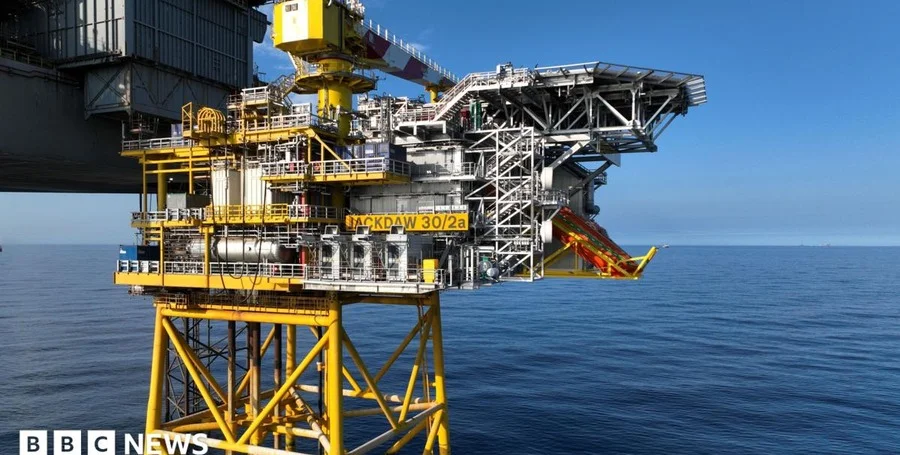
The UK government is reportedly poised to sanction the Jackdaw gas field, a contentious new energy project located off the coast of Aberdeen in the North Sea. Final approval could arrive in mid-September. This timing falls just ahead of Parliament’s recess for party conferences.
Previously, a Conservative administration initially approved the Jackdaw gas field in 2022. However, a Scottish court ruling later halted progress. Environmental groups successfully argued that climate impacts were not fully considered during the initial consent process.
Last year, Edinburgh’s Court of Session ruled that both Jackdaw and the Rosebank oil field were unlawfully approved. The judgment demanded more detailed climate assessments, which were subsequently published for public consultation in July.
Adura, a joint venture between energy giants Shell and Norway’s Equinor, operates the Jackdaw field. The company estimates Jackdaw could provide 6% of the UK’s gas output at its peak. However, environmental campaigners dispute this, claiming it would only supply 2% of total UK consumption when imports are included.
Moreover, Adura projects the Jackdaw gas field could generate 35.8 million tonnes of carbon over its 11-year lifespan. This figure represents approximately 90% of Scotland’s total emissions for 2023. A more conservative estimate suggests around 23.6 million tonnes, equivalent to 60% of that 2023 figure.
Environmental advocates firmly oppose further drilling. They argue it undermines efforts to cut planet-warming carbon emissions. They point to escalating heatwaves and extreme weather events globally. Additionally, campaigners contend that starting production would not safeguard energy security. Instead, they advocate for a quicker transition to greener technologies, asserting it would better support job creation.
Conversely, industry bodies maintain that new sites would create vital jobs. They also stress the importance of improving UK energy security. This is particularly relevant as international conflicts continue to threaten global energy supplies.
Furthermore, proponents argue that Jackdaw’s output is crucial for extending the operational life of other North Sea infrastructure. This includes Shearwater, a significant offshore hub. Adura indicates that if approval comes this month, gas could reach UK homes by winter, as construction is “99% complete.”
The public consultation concerning both Jackdaw and Rosebank concluded in August. Now, the final decision rests with Energy Secretary Miatta Fahnbulleh. Energy Minister Kate White confirmed separate decisions for the two sites in the House of Commons, though she offered no timeline for an announcement.
Prime Minister Andy Burnham recently advocated for a “pragmatic approach” to domestic oil and gas. He acknowledged that the UK will rely on fossil fuels for some time. He also suggested accelerating their use could help fund the green transition.
The UK depends heavily on gas imports, with over 60% sourced from Norway and the United States. Wholesale natural gas prices have surged this year, reaching a three-year high due to the Iran conflict. This situation heightens concerns about national energy security.
While international prices dictate consumer costs, domestic extraction offers a benefit. It produces lower greenhouse gas emissions compared to importing liquefied natural gas (LNG). Chris O’Shea, CEO of Centrica, believes additional domestic supply is beneficial. He stated it reduces reliance on imported fossil fuels. He also noted the high tax rates on North Sea profits, which could boost government revenue.
However, Tessa Khan, Executive Director of Uplift, argues that more North Sea drilling will not reduce energy bills. She believes it will make “no meaningful difference” to the UK’s energy supply. She also highlighted scientific consensus that existing oil and gas reserves already exceed safe burn limits for global warming. Khan urged the Prime Minister to prioritize scientific warnings and consider climate impacts over “self-interested demands of oil companies.”
The Department for Energy Security and Net Zero refrained from commenting on speculation. A spokesperson confirmed the North Sea remains a vital national asset. Oil and gas will continue playing an important role for decades, alongside the transition to clean power. Any decision, they added, will incorporate all relevant evidence, including environmental assessments and public feedback.