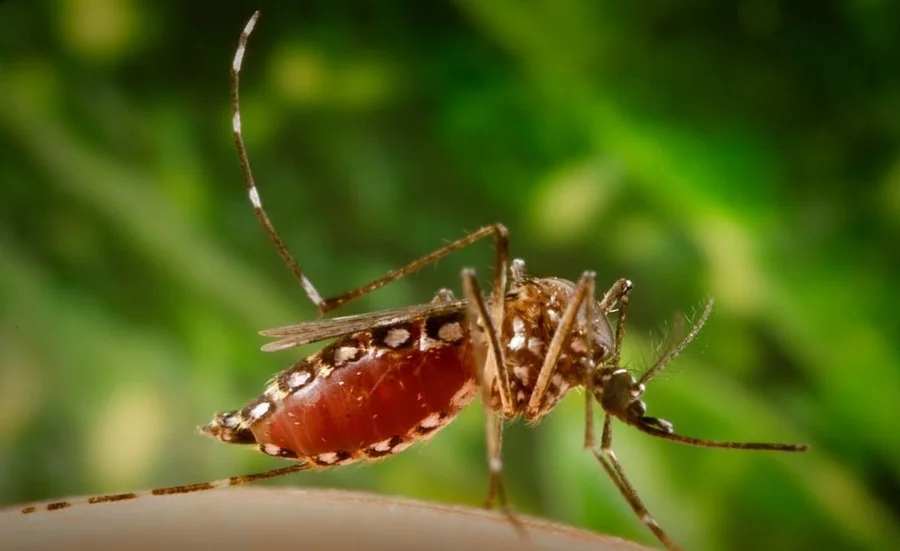
Health officials have issued a warning following the discovery of invasive mosquitoes in London. Specifically, the Aedes aegypti species, capable of transmitting deadly viruses, has been found breeding inside homes in East London. This marks the first recorded instance of this mosquito type reproducing within the UK.
The UK Health Security Agency (UKHSA) raised this alarm. The unprecedented heatwaves experienced in the capital this year likely contributed to the development. Consequently, enhanced surveillance and trapping activities are now underway.
Larvae of these invasive mosquitoes were identified at several residential sites. Control measures were promptly implemented to eradicate them. The undisclosed East London area remains under close observation for any further signs of mosquitoes or larvae.
Despite the finding, the risk to the public is assessed as very low, according to Dr. Jolyon Medlock. He heads Medical Entomology and Zoonoses Ecology at UKHSA. Dr. Medlock noted that Aedes aegypti can transmit dengue, chikungunya, and Zika in other countries.
However, no evidence suggests these mosquitoes have caused human infections locally. Furthermore, there is no indication of their presence in nearby public areas.
Authorities believe these mosquitoes are “accidental importations.” Invasive species often hitchhike in vehicles, baggage, or imported plants. They can survive if they encounter a suitable climate upon arrival.
Even with recent heatwaves and breeding evidence, the species is not established long-term in the UK. The typical British climate is generally too cold for their survival. Nonetheless, a warming climate is expected to bring more incursions of invasive mosquitoes. Increased reports of their survival in the UK are also anticipated.
This marks the fourth time this specific species has been detected in the UK recently. The latest discovery came via UKHSA’s Mosquito Watch surveillance scheme. Londoners are encouraged to assist detection efforts.
As a precaution, the public can help reduce mosquito breeding opportunities. This involves removing any standing water from gardens and outdoor spaces. Examples include water in buckets, containers, paddling pools, and plant pots.